

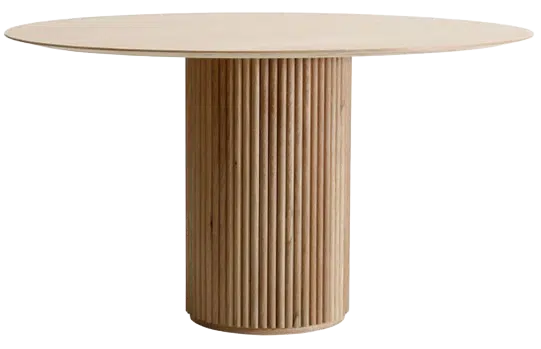
The Court of Justice of the European Union (CJEU) has delivered its highly-anticipated judgment in two joined cases of Mio AB et al and Konektra involving designer furniture.
In its judgment of 4 December 2025, the CJEU confirms and refines its existing case law on copyright protection of so-called applied art, which are designs that serve a functional purpose, and clarifies how infringement should be assessed.

Copyright does not discriminate
The CJEU confirms once and for all that copyright does not discriminate between categories of works.
This means that there can be no stricter requirements for the protection of works of applied art than for other types of works (such as paintings, sculptures, music, etc.).
The existence of (possible) design right protection does not change that.
The CJEU affirms (once again) that it is generally possible for an object to be protected by both, design right and copyright. Both IP regimes exist independently, they pursue different objectives and are subject to distinct rules, but they do not exclude each other.
Originality remains key
So when is a work (of applied art) protected under copyright? One word: originality. Nothing more, nothing less.
The CJEU reaffirms that in order for a work to be “original” it is both necessary and sufficient that it reflects the personality of its author, as an expression of his or her free and creative choices.
Choices dictated by various constraints, particularly technical, which bound that author during the creation are not free and creative, and nor are choices which, while free, do not bear the imprint of the author’s personality by giving that subject matter a unique appearance.
The CJEU unfortunately passed on the opportunity to further clarify the assessment of “the imprint of the author’s personality” in the hypothesis that free choices are made.
Factors which are non-decisive for originality
As the assessment of originality remains a difficult task at times, the referring courts had listed a number of factors which might be taken into account. The CJEU took the opportunity to clarify that the following elements may be taken into account where appropriate, but are not, in any event, necessary or decisive for the purpose of establishing the originality of the subject matter for which protection is claimed.
The author’s intentions belong to the realm of ideas and can be protected only insofar as they are expressed in the work itself.
The CJEU confirms its rejection of aesthetics or artistic effect as a criterion for originality. While it is true that such considerations play a part in creative activity, the fact that a design generates such an effect does not, in itself, make it possible to determine whether that design is original.
The use of existing design elements does not preclude originality, for example if the author has made creative choices in selecting and arranging those elements. Where authors develop new variants of their own earlier work, the new version may enjoy full copyright protection since the creative elements derive from the same author’s personality.
External recognition factors such as museum exhibitions or professional acclaim are neither necessary nor, in themselves, decisive for establishing originality.
Copyright infringement
Conclusion
Although most findings are in line with the CJEU’s previous case law, the judgment marks another important step towards harmonization of EU copyright law.
It reaffirms once again the “originality” approach of copyright protection and dismisses (stubborn) views seeking to restrict protection of applied art.
This judgment is a win for designers and manufacturers seeking protection for applied art as it simplifies protection to the only relevant threshold (i.e. originality), and rejects additional requirements imposed by certain jurisdictions.
For more information on this decision and copyright protection, contact our Innovation Lawyers.

